A cafeteria POS for karak and tea shops, built around the car outside
Cupcloud is a cafeteria POS for karak shops, tea shops and roadside cafeterias in the UAE. Customers order from the car with their plate and emirate, the cashier rings up walk-ins with short codes and one tap, cash is taken with the change worked out, and every cup can get its own label. It runs in English and Arabic in a browser, with prices in AED and UAE VAT.
A cafeteria sells a lot of small things very fast: karak at two dirhams, a chips oman paratha, a fresh lemon mint, a pack of water. Most of it goes out to cars with the engine running, much of it after nine at night. A till built for a sit-down restaurant slows that down. Cupcloud is a karak cafeteria system set up for the way a cafeteria actually works, car service included: the car park, the counter and the tea station on one screen, and the cash that adds up at the end of the night.
A night at the counter, with Cupcloud
Here is a normal evening rush at a cafeteria in Sharjah or Ajman, using only what Cupcloud does today.
- 9:40 pm. A white Patrol pulls in. The driver scans the QR on your car-park board, picks three karak (one less sugar) and two chicken paratha in Arabic, and enters the plate, the emirate and a mobile number
- The order lands in the staff queue and keeps ringing until someone accepts it, so nobody has to watch the screen while they pour tea
- The kitchen ticket prints for the paratha, and a label prints for each of the five pieces, with the plate number on every one and less sugar on the right cup
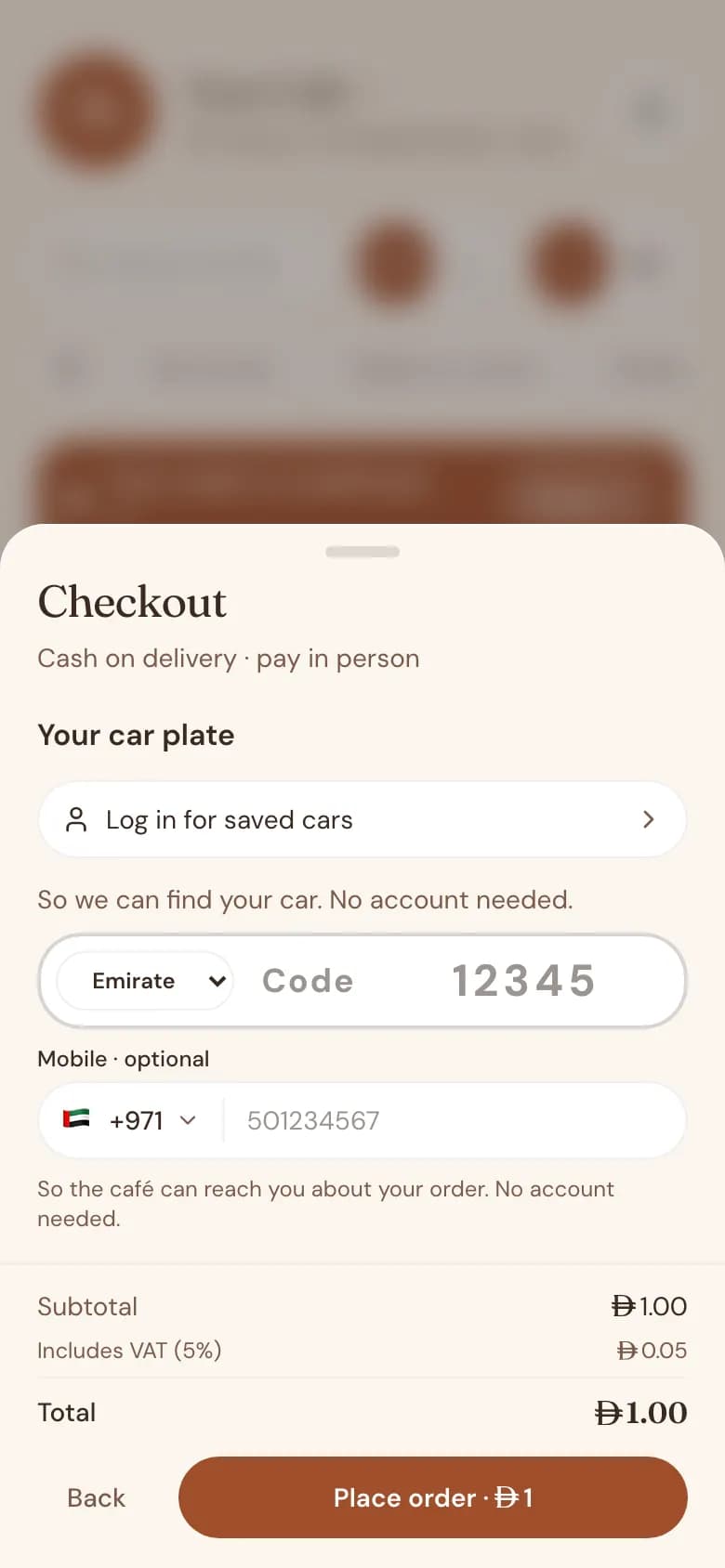
- At the same moment a regular honks without scanning. The cashier presses the Car key, types the emirate and plate, types the short code K for karak twice, and places the order; a mobile number is optional when staff take a car order
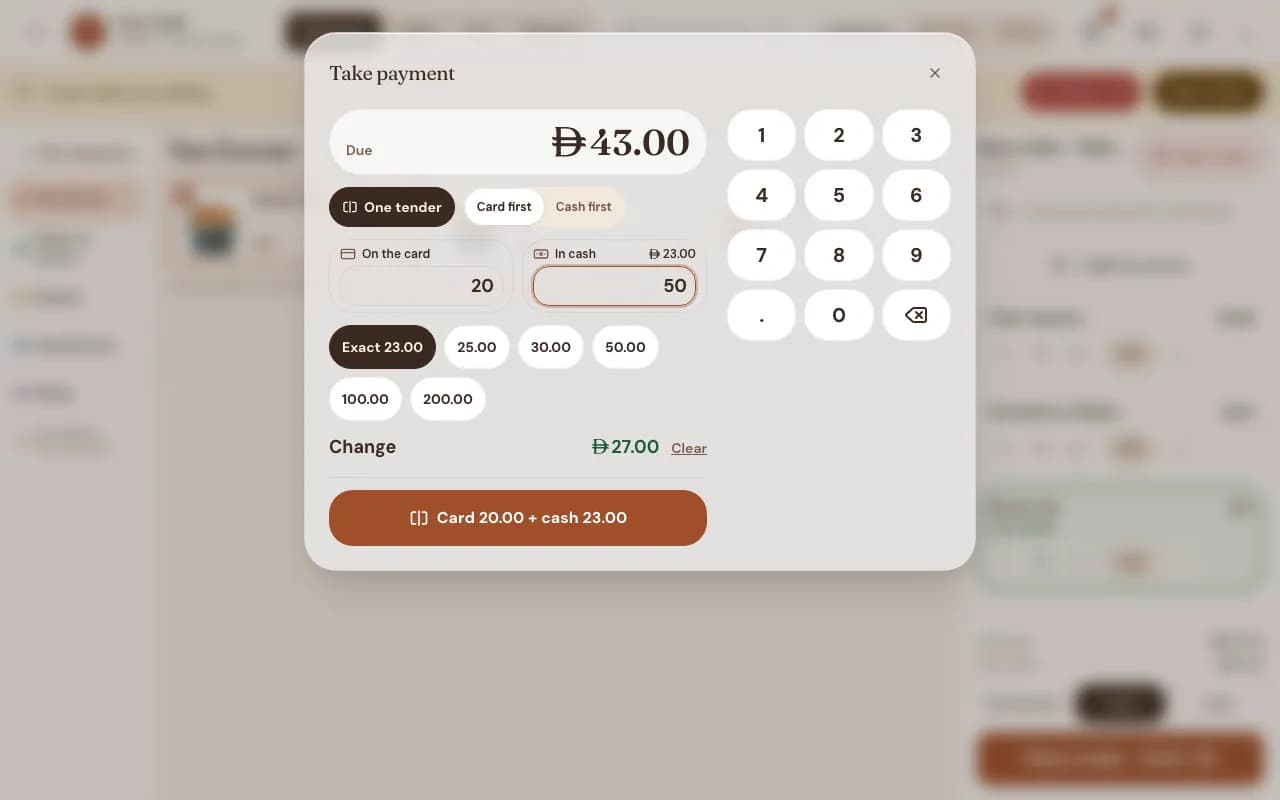
- A staff member carries the tray to the car with the plate on the bag label. The driver pays a fifty-dirham note; the payment dialog shows the change to give back
- At 2 am the manager closes the day: the Z report lists what was sold, the cash expected in the drawer and the count, even though the date changed at midnight
Car orders that find the right car, with a label on every cup
In a cafeteria the car park is the dining room, and a name means nothing through a windscreen. Cupcloud identifies a car order by its plate and emirate, because the same digits can sit on a Sharjah plate and a Dubai plate side by side. Customers who scan give a mobile number as well; when your staff take the order at the window, the plate and emirate are enough, and the car's colour and model can be noted to make it easier still.
Customer orders from the car and the orders your staff take at the window go to the same queue, so the tea station works one list. The customer's tracking page shows the order received, preparing and ready, which is what the second press of the horn was asking. Cash at the car is the default; customers can also pay by card online through your own gateway account before you walk out.
Five karak in a carrier look the same, so turn on item labels: Cupcloud prints one label per piece for takeaway, car and delivery orders, with the order number, the plate, the item, its size and options such as less sugar or no ice, the special request and the time, numbered 1/5, 2/5 and so on, and never a price. A bag label carries the plate in its title and the car's colour or model underneath. You choose which categories get labels, for example drinks only, and they print on a thermal label printer, a Zebra or the receipt printer through the print agent on the café's Windows PC.
Counter speed for a small menu of cheap items
A cafeteria menu is short but busy: the same twenty items over and over, at small prices. The Categories view shows each item as a tile with its photo, so a new cashier finds things by sight. A regular cashier does not look at all: give items short codes, type the code and press Enter. Search also works in Arabic and English and forgives a typo.
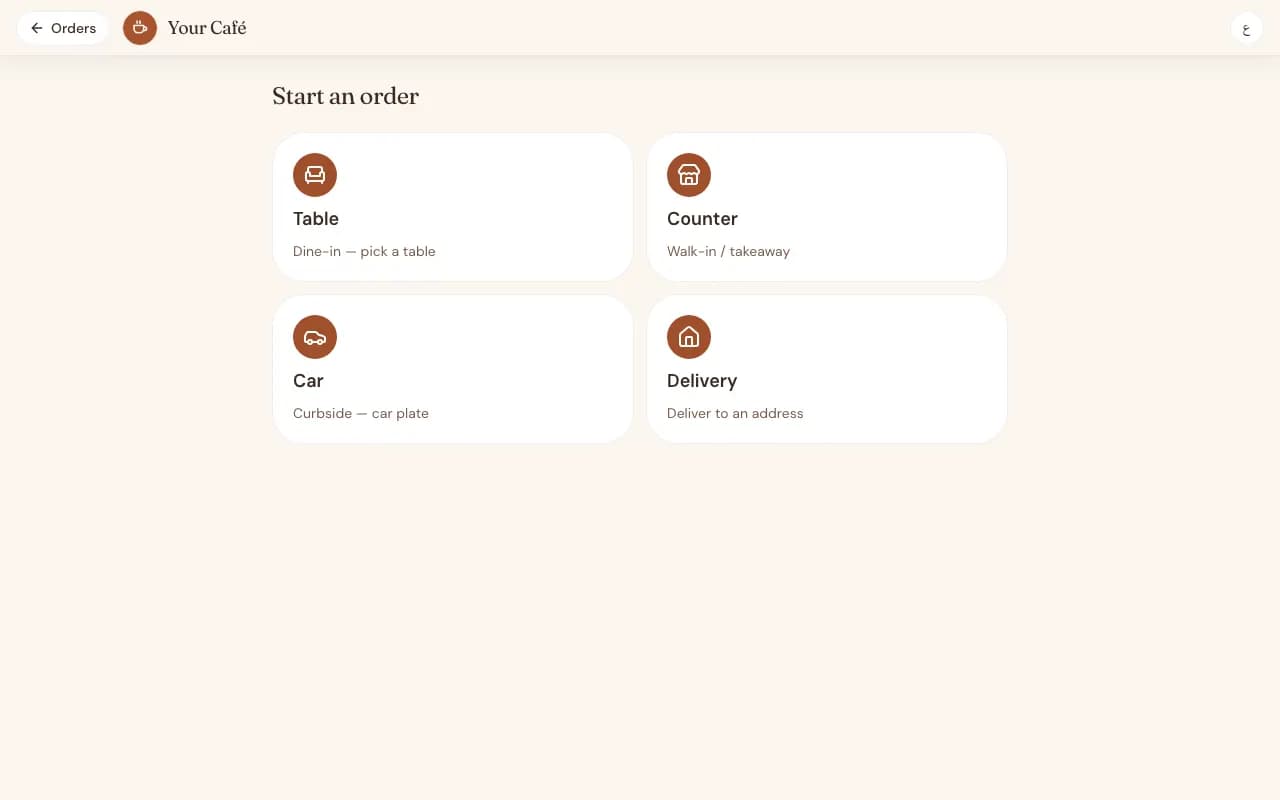
One tap adds an item. Only an item with a size or a required choice opens a picker, so karak goes in with one tap and a juice with its size in two. The keyboard covers the rest: F1 to F4 switch between takeaway, table, car and delivery, F8 switches the payment between not paid, cash and card and F9 places the order. After placing, the screen is already on the next order.
- Short codes you choose, typed and entered without the mouse
- Popular today: the items selling most, or your own list, at the top
- Each tap is its own line, or turn on merge identical items so ten karak read as one line
- Sold-out items stay visible on every screen but cannot be added
- Arabic or English on the order screen, one language per screen
Cash with change, and card on your own machine
Most cafeteria customers pay cash, often with a big note for a small order. The payment dialog has its own number keypad: the cashier enters the note received and Cupcloud shows the change, worked out to the fils. The printed bill can show the cash received and the change. Card is taken on the card machine you already have and recorded with the order, and a bill can be split part card, part cash.
Only a cashier or a manager can take payment, a paid order's total is frozen, and a manager can refund a counter payment with a reason. Cupcloud takes no commission on any order.
What matters most for a cafeteria
Every Cupcloud café gets the whole system. These are the parts that do the most work in a cafeteria, and why.
- Cars arrive all evening: car orders by plate and emirate, and a car-park QR board printed at A3 or A2 in English and Arabic
- Staff are outside at the cars: order alerts that ring until someone accepts, louder after two minutes, and an optional buzzer on the kitchen printer
- Many small, repeated sales: short codes, one tap per item and keyboard shortcuts
- Mostly cash: the change worked out, cash in and cash out recorded, and a guided cash count at close
- Open late: opening hours that run past midnight, breakfast or evening items sold only in their hours, and a day that closes when you close it
- Buildings nearby: delivery to your own zones with your own delivery boys, and their cash settled per shift
What Cupcloud does not do for a cafeteria
There is no inventory: selling a karak does not deduct milk or tea, and purchase bills record what you spend, not stock levels. There is no loyalty card, no automatic SMS or WhatsApp message to customers, and no integration with delivery apps. The counter needs an internet connection; offline mode is coming soon, not available yet. Card payments at the counter use your own card machine; there is no built-in terminal. The manager's admin screens are in English for now, while the customer screens and the order screen are in Arabic and English.
Common questions
Is there a POS made for cafeterias and karak shops in the UAE?
Cupcloud is built for them: car orders by plate and emirate, a fast counter screen with short codes, cash with change, a label per cup and a day close that works past midnight, in Arabic and English.
Can my staff take a car order at the window without the customer scanning?
Yes. On the order screen they choose Car and enter the emirate and plate; the mobile number is optional for an order staff take. It goes to the same queue as the orders customers place themselves.
Does it work with a cheap tablet at the tea station?
Yes. Cupcloud runs in a browser on a till, laptop, tablet or phone. Printing tickets, bills and labels needs a Windows PC in the shop with the print agent.
My cafeteria is open until 3 am. Does the day close at midnight?
No. A session opens with the first order and stays open until the manager closes it with the Z report, so a night that runs past midnight is one day in your figures.
Does Cupcloud track my stock of milk, tea and bread?
No. Cupcloud has no inventory or recipe stock. You can record purchase bills and supplier payments in the back office, but they do not count stock.
How much does a cafeteria POS from Cupcloud cost?
Start with a 14-day free trial, no card needed, by signing up online or messaging us on WhatsApp. Pricing after the trial is on request, and there is no commission per order.